;}.cls-2{fill:%2358d687;}.cls-3{fill:url(%23Degradado_sin_nombre_10);}.cls-4{fill:url(%23Degradado_sin_nombre_31);}.cls-5{fill:%238030d1;}.cls-6{fill:url(%23Degradado_sin_nombre_23);}%3c/style%3e%3clinearGradient%20id='Degradado_sin_nombre_17'%20x1='129.39'%20y1='83.35'%20x2='56.4'%20y2='162.54'%20gradientUnits='userSpaceOnUse'%3e%3cstop%20offset='0'%20stop-color='%23287d8c'/%3e%3cstop%20offset='1'%20stop-color='%2350b5db'/%3e%3c/linearGradient%3e%3clinearGradient%20id='Degradado_sin_nombre_10'%20x1='449.01'%20y1='190.97'%20x2='266.02'%20y2='78.2'%20gradientUnits='userSpaceOnUse'%3e%3cstop%20offset='0'%20stop-color='%23ffe286'/%3e%3cstop%20offset='1'%20stop-color='%23ffcd1d'/%3e%3c/linearGradient%3e%3clinearGradient%20id='Degradado_sin_nombre_31'%20x1='99.7'%20y1='309.69'%20x2='146.19'%20y2='485.35'%20gradientUnits='userSpaceOnUse'%3e%3cstop%20offset='0.01'%20stop-color='%23ff9464'/%3e%3cstop%20offset='1'%20stop-color='%23b3553a'/%3e%3c/linearGradient%3e%3clinearGradient%20id='Degradado_sin_nombre_23'%20x1='547.05'%20y1='208.96'%20x2='252.56'%20y2='438.86'%20gradientUnits='userSpaceOnUse'%3e%3cstop%20offset='0'%20stop-color='%23ff7da1'/%3e%3cstop%20offset='1'%20stop-color='%23f20b4f'/%3e%3c/linearGradient%3e%3c/defs%3e%3ctitle%3efavicon%3c/title%3e%3cg%20id='_Group_'%20data-name='<Group>'%3e%3cg%20id='_Group_2'%20data-name='<Group>'%3e%3cg%20id='_Group_3'%20data-name='<Group>'%3e%3cpath%20id='_Path_'%20data-name='<Path>'%20class='cls-1'%20d='M232.54,165.43a124.47,124.47,0,0,1-106.95,60.76h0A101.77,101.77,0,0,1,23.82,124.41V0L132.31,95.94A517.46,517.46,0,0,0,232.54,165.43Z'/%3e%3cpath%20id='_Path_2'%20data-name='<Path>'%20class='cls-2'%20d='M250,0V101.78a123.87,123.87,0,0,1-17.46,63.65A517.46,517.46,0,0,1,132.31,95.94L23.82,0Z'/%3e%3cpath%20id='_Path_3'%20data-name='<Path>'%20class='cls-3'%20d='M476.18,226.19a518.87,518.87,0,0,1-243.64-60.76A123.87,123.87,0,0,0,250,101.78V0A226.12,226.12,0,0,1,476.18,226.19Z'/%3e%3cpath%20id='_Path_4'%20data-name='<Path>'%20class='cls-4'%20d='M232.54,334.57a517.71,517.71,0,0,0-100.23,69.54L23.82,500V375.59A101.77,101.77,0,0,1,125.59,273.81h0A124.47,124.47,0,0,1,232.54,334.57Z'/%3e%3cpath%20id='_Path_5'%20data-name='<Path>'%20class='cls-5'%20d='M250,398.22V500H23.82l108.49-95.89a517.71,517.71,0,0,1,100.23-69.54A123.87,123.87,0,0,1,250,398.22Z'/%3e%3cpath%20id='_Path_6'%20data-name='<Path>'%20class='cls-6'%20d='M476.18,273.81A226.12,226.12,0,0,1,250,500V398.22a123.87,123.87,0,0,0-17.46-63.65A518.87,518.87,0,0,1,476.18,273.81Z'/%3e%3c/g%3e%3c/g%3e%3c/g%3e%3c/svg%3e)
Keeping Players Engaged: Loops, Retention and Live Data
For designers who already understand basic game systems and want to learn how core loops, persistence, frustration and live data keep players returning.
6 lessons · 1 hr 38 min
- Beginner (not covered)
- Intermediate
- Advanced (not covered)
What you’ll learn
- Explain how a core loop links motivation, action and reward to player return
- Design hubs, quests and difficulty that encourage players to persist
- Judge when frustration is a deliberate choice and when it drives players away
- Use segmentation and A/B tests to evaluate retention changes
- Read live game telemetry to guide design and operations decisions
Lessons
- Lesson 1:
Core Loop Design for Retention 🔁📈
Meta Developers 8 min Intermediate
Start here: the core loop of motivation, action and reward, which every later video builds on.
Explains how core loops that align motivation, action and reward drive players to return, covering reward variation, visible progression, goals, feedback and competitive hooks. It introduces five styles of core loop and best practices for rotating rewards and adding new content to an existing cycle, aimed at game creators.
Meta Developers 5 min Intermediate
Applies the loop to world layout, hubs and quests, and adds simple retention metrics to track.
The video explains how to design virtual worlds that bring players back, covering layout and flow around social hubs, quest design and mobile-friendly changes that reduce travel. It also covers simple retention metrics for iterating on repeat visits.
Google Design 4 min Intermediate
Turns to frustration as a deliberate design pattern, offering a short contrast before persistence.
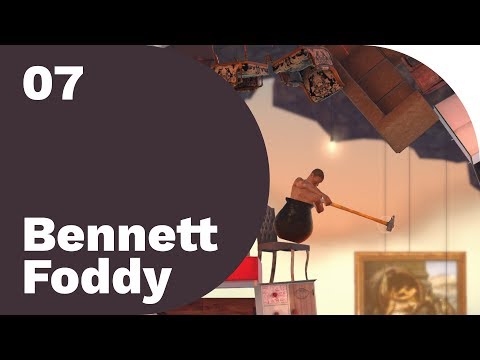
A Design Notes podcast interview in which game designer and philosopher Bennett Foddy discusses using frustration as a design pattern, placing games at the intersection of art and software, and the audience he had in mind when creating Getting Over It. It suits designers interested in the thinking behind interaction and game design.
- Lesson 4:
How to design for player persistence, Megan Pusey, Murdoch University - GRUX Online 2021 Microtalk
Games User Research SIG 6 min Intermediate
Looks at what keeps players going through hard sections, and what turns motivating challenge into rage.
A GRUX 2021 microtalk by Megan Pusey of Murdoch University on how game design encourages player persistence through challenging parts of a game. It shares three case studies of players with different motivations, looking at which design features they find motivating and which provoke rage, and how to reduce churn.
Games User Research SIG 37 min Intermediate
Moves from design intuition to data, covering segmentation, A/B testing and retention across the life cycle.
A Miniclip data talk on using quantitative research and game analytics to support decisions across the player lifecycle, covering retention, engagement, monetisation and virality. It draws on A/B testing, behavioural analysis, simulations and player segmentation, and suits designers and researchers who already work with game data.
Games User Research SIG 39 min Intermediate
Closes with a shipped AAA case study of telemetry guiding design and live operations decisions.
A Ubisoft Paris game analytics lead shares how telemetry data informed design and live-operations decisions across Tom Clancy's Ghost Recon Wildlands, from the first playable build to the live game. The talk also covers analytics-driven features in the game.





Keep going
Search and sort within Keeping Players Engaged: Loops, Retention and Live Data
Sign in to mark lessons complete and see how far through you are.