Spotting Current Design Trends Across Web, UX and Graphics
For beginners who want to understand current web, UX and graphic design trends and judge which ones suit their own work. Work through these six short videos to recognise the patterns and weigh them against real projects.
6 videos · 53 min
What you’ll learn
✓Explain why design trends matter for innovation and future-proofing products
✓Name the main current trends in web, UX/UI and graphic design
✓Recognise patterns such as bento grids, brutalism, dark mode and 3D in real work
✓Weigh how AI tools and inclusive design may change your practice
✓Judge which trends fit a project and which to skip
A university lecture from a UX engineering module that explains why studying design trends matters for innovation and future-proofing products. It surveys contemporary trends such as minimalist interfaces, AI-driven personalisation, sustainable UX and ethical, privacy-centred UX, with an example, benefit and challenge for each.
A walkthrough of web design trends for 2026, covering chapters on grids, 3D, gradients, brutalism, gamification, anti design, minimalism and variable fonts. The description frames it for web designers and developers interested in inspiring interfaces and interactions.
The video presents five new rules the creator says web designers need to follow as the web changes, based on the title and description. The description is vague on the specifics of each rule.
Eric predicts five UX and UI design trends for 2024: augmented reality, voice user interfaces, AI tools for designers, personalized experiences, and inclusive and accessible design. It is a forecast talk for designers rather than a hands-on tutorial.
A short overview of graphic design trends expected in 2025, presented as the creator's personal opinions and predictions. It covers aesthetics, colour, tools and the possible influence of AI on design.
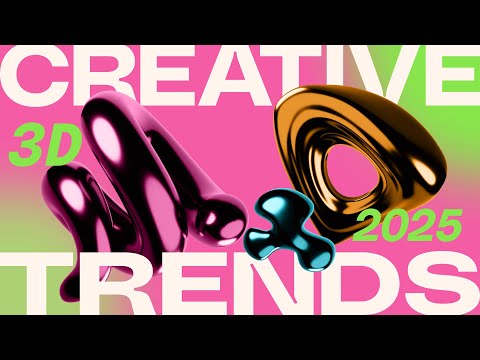
A short overview of current 3D design trends, covering dimensional typography, sustainable, hyperrealistic and tactile 3D styles, and how AI, augmented reality and the Spline tool feature in 3D work.
This path is for beginners who want to understand design trends and then move on to intermediate forecasts. You will learn why trends matter and how web, UX/UI, graphic and 3D styles have shifted over recent years.
For intermediate designers who want a steady, personal way to find and keep references. You will be able to curate sources, run a moodboard routine and judge which current web trends suit your work.
;}.cls-2{fill:%2358d687;}.cls-3{fill:url(%23Degradado_sin_nombre_10);}.cls-4{fill:url(%23Degradado_sin_nombre_31);}.cls-5{fill:%238030d1;}.cls-6{fill:url(%23Degradado_sin_nombre_23);}%3c/style%3e%3clinearGradient%20id='Degradado_sin_nombre_17'%20x1='129.39'%20y1='83.35'%20x2='56.4'%20y2='162.54'%20gradientUnits='userSpaceOnUse'%3e%3cstop%20offset='0'%20stop-color='%23287d8c'/%3e%3cstop%20offset='1'%20stop-color='%2350b5db'/%3e%3c/linearGradient%3e%3clinearGradient%20id='Degradado_sin_nombre_10'%20x1='449.01'%20y1='190.97'%20x2='266.02'%20y2='78.2'%20gradientUnits='userSpaceOnUse'%3e%3cstop%20offset='0'%20stop-color='%23ffe286'/%3e%3cstop%20offset='1'%20stop-color='%23ffcd1d'/%3e%3c/linearGradient%3e%3clinearGradient%20id='Degradado_sin_nombre_31'%20x1='99.7'%20y1='309.69'%20x2='146.19'%20y2='485.35'%20gradientUnits='userSpaceOnUse'%3e%3cstop%20offset='0.01'%20stop-color='%23ff9464'/%3e%3cstop%20offset='1'%20stop-color='%23b3553a'/%3e%3c/linearGradient%3e%3clinearGradient%20id='Degradado_sin_nombre_23'%20x1='547.05'%20y1='208.96'%20x2='252.56'%20y2='438.86'%20gradientUnits='userSpaceOnUse'%3e%3cstop%20offset='0'%20stop-color='%23ff7da1'/%3e%3cstop%20offset='1'%20stop-color='%23f20b4f'/%3e%3c/linearGradient%3e%3c/defs%3e%3ctitle%3efavicon%3c/title%3e%3cg%20id='_Group_'%20data-name='<Group>'%3e%3cg%20id='_Group_2'%20data-name='<Group>'%3e%3cg%20id='_Group_3'%20data-name='<Group>'%3e%3cpath%20id='_Path_'%20data-name='<Path>'%20class='cls-1'%20d='M232.54,165.43a124.47,124.47,0,0,1-106.95,60.76h0A101.77,101.77,0,0,1,23.82,124.41V0L132.31,95.94A517.46,517.46,0,0,0,232.54,165.43Z'/%3e%3cpath%20id='_Path_2'%20data-name='<Path>'%20class='cls-2'%20d='M250,0V101.78a123.87,123.87,0,0,1-17.46,63.65A517.46,517.46,0,0,1,132.31,95.94L23.82,0Z'/%3e%3cpath%20id='_Path_3'%20data-name='<Path>'%20class='cls-3'%20d='M476.18,226.19a518.87,518.87,0,0,1-243.64-60.76A123.87,123.87,0,0,0,250,101.78V0A226.12,226.12,0,0,1,476.18,226.19Z'/%3e%3cpath%20id='_Path_4'%20data-name='<Path>'%20class='cls-4'%20d='M232.54,334.57a517.71,517.71,0,0,0-100.23,69.54L23.82,500V375.59A101.77,101.77,0,0,1,125.59,273.81h0A124.47,124.47,0,0,1,232.54,334.57Z'/%3e%3cpath%20id='_Path_5'%20data-name='<Path>'%20class='cls-5'%20d='M250,398.22V500H23.82l108.49-95.89a517.71,517.71,0,0,1,100.23-69.54A123.87,123.87,0,0,1,250,398.22Z'/%3e%3cpath%20id='_Path_6'%20data-name='<Path>'%20class='cls-6'%20d='M476.18,273.81A226.12,226.12,0,0,1,250,500V398.22a123.87,123.87,0,0,0-17.46-63.65A518.87,518.87,0,0,1,476.18,273.81Z'/%3e%3c/g%3e%3c/g%3e%3c/g%3e%3c/svg%3e)