Learning path

Measuring Design Impact: Goals, Metrics and Reporting

For intermediate designers ready to take on advanced leadership work, this path shows how to set goals, choose metrics and report design results to leaders with evidence.

What you’ll learn

  • Set goals and OKRs that tie design work to strategy
  • Choose a small set of core metrics that show design's business impact
  • Measure quality and experience, not just output or adoption
  • Report design results to leaders with evidence rather than opinion
  • Assess the health of a design practice and track it over time

Lessons

  1. NNgroup 28 min Intermediate

    Start here: Starts with goal-setting and OKRs, since you have to know what you are aiming for before measuring it.

    In this NN/g podcast, host Laura Klein talks with Christina Wodtke, author of Radical Focus, about what makes objectives and key results work. The discussion covers weekly and quarterly rituals, psychological safety, and why strategy and vision must exist before setting an OKR.

  2. Paul Bryan - AI and UX Strategy 7 min Intermediate

    Adds a concrete example of return on experience, linking your goals to a business measure leaders recognise.

    A highlight from a UX strategy talk by Emily Leahy of IHG, covering the situation, solution and early results of measuring digital Return on Experience (RoX). It suits designers and strategists interested in measuring the business value of experience work.

  3. NNgroup 4 min Intermediate

    Gives a simple framework, REACH, for choosing which metrics to track, so later talks have a structure to build on.

    Introduces the REACH framework (Results, Efficiency, Ability, Clarity, Health) for measuring DesignOps success and triangulating relevant metrics. It is aimed at people who already run or support design operations.

  4. Chris from rectangles® 9 min Advanced

    Moves from goals to impact itself: core metrics, common mistakes and how to influence a team with evidence.

    Chris and Ryan discuss how designers can measure the impact of their work, covering core metrics, common mistakes and how to influence a team. The talk is aimed at designers who already work in product or leadership roles.

  5. DesignX: Design Leadership & Community 30 min Advanced

    Shifts from impact to quality, using data-based frameworks for measuring design work from a large organisation.

    A talk by Jessa Parette, Director of Experience Design at Capital One, presented at Remote Design Week 2021. It shares data-based frameworks for measuring design quality, showing how software and design teams can use the same data yet form different metrics.

  6. Designer Fund 14 min Advanced

    Shows how to measure a hard-to-quantify goal, belonging, and make the business case for it to leaders.

    A Designer Fund case study in which Airbnb designers explain how they quantify, design for and measure belonging, shown alongside other design leaders' work on the business impact of design. It is aimed at design practitioners and business leaders.

  7. Tom Smykowski 13 min Advanced

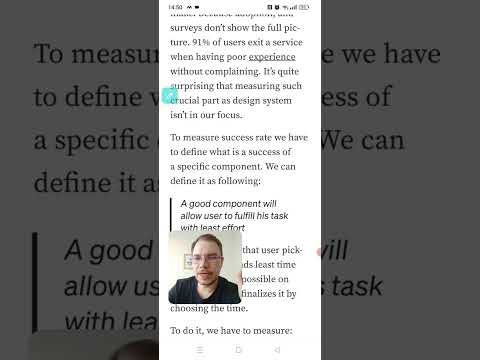
    Applies measurement to a design system, showing how to prove its value with real UX metrics rather than adoption figures.

    Argues that design system teams should measure real, quantifiable UX metrics rather than relying on adoption and surveys, and shows how to prove a design system's business value.

  8. AI Ops 52 min Advanced

    Widens the view from single projects to the health of the whole design practice and how to monitor it.

    A DesignOps Sydney talk by Dave Malouf on what a healthy design practice looks like, how to assess it, and how to monitor and maintain an organisation's design health goals so they support the business, stakeholders and customers.

  9. Service Lab 70 min Advanced

    Adds wider views on customer experience metrics and post-launch tracking in a long panel for deeper study.

    A recorded Service Lab event from July 2020 with three speakers on measuring design impact. Topics include customer experience performance metrics, evaluating digital health products, and tracking the impact of service transformation over time.

  10. CoreElevation 19 min Advanced

    Closes with a short look at describing outcomes with specific measures and using them to explain your value.

    A conversation with Chris Lema on measuring success in web design, focusing on why tracking the results of your work matters and how to use those results to explain your value and win clients. It touches on some measurement tools and is aimed at working web designers.

When you've finished

Next path: Scaling Design Leadership in Practice (Advanced)

Want an easier start? Leadership Path for Designers: From Making to Leading

All paths in Leadership

Search and sort within Measuring Design Impact: Goals, Metrics and Reporting

All paths
  • Learning pathBeginner → IntermediateDesignOps

    Understanding DesignOps and How Its Value Is Measured

    For designers and product people new to DesignOps who want to know what it is, who does it, and how its value is judged. By the end you can explain the role and frame its impact.

    8 lessons · 3 hr 7 min, plus 1 optional

  • Learning pathIntermediateLeadership

    Leading a Design Team: From People to Decisions

    For designers moving into lead roles who want to manage people, work with product and engineering, and make decisions that the wider business can follow.

    8 lessons · 4 hr 38 min

  • Learning pathIntermediateDesign Culture

    Building a Healthy Design Culture

    For designers and team leads who want feedback, craft and team habits that hold up over time. You will learn to handle critique, run safer feedback sessions and support wellbeing in your team.

    4 lessons · 84 min, plus 1 optional

  • Learning pathIntermediateDesignOps

    Day-to-Day DesignOps: Processes, Tools and Capacity

    For designers and design leads who want to understand how DesignOps runs day to day. You will be able to map processes, make team capacity visible and explain the value of the work to others.

    8 lessons · 5 hr 28 min, plus 2 optional